Residential service
Service pricing to help you plan.
- Furnace tune-up
- $153
- Mitsubishi tune-up
- Starting at $224
Ask what your visit includes and confirm the total, including any applicable charges, before scheduling. Repair work and installation are quoted separately.
Start with your home
A heating system has a quieter job in mild months and a much bigger one when the temperature drops. Routine maintenance gives you a chance to review that system before you are relying on it every day. Breeze can help homeowners in Kent, King County, and the Eastside think through practical care for furnaces and heat pumps, with recommendations based on the equipment and home in front of us.
Maintenance is not a remote diagnosis or a promise that a system will never need repair. It is a planned look at operation, safety, airflow, and condition. If an inspection finds a concern, a professional should explain what was observed and what options are appropriate rather than assuming every home needs the same work. That is a more useful way to support Innovating the Future of Home Comfort.
Why timing matters
ENERGY STAR recommends annual, pre-season checkups: cooling equipment in spring and heating equipment in fall. Scheduling before the busy heating season gives a homeowner time to understand a finding and decide on next steps without making a rushed choice. In the Pacific Northwest, a system may cycle through cool, damp shoulder-season weather before sustained winter use, so the right timing can depend on your equipment, household routine, and prior service history.
A furnace and a heat pump do not need identical attention. A furnace uses combustion to create heat; a heat pump moves heat and may provide both heating and cooling. A ducted heat pump relies on the home’s ductwork, while a ductless system uses indoor units connected to an outdoor unit. Those differences affect what a technician needs to observe. Maintenance should start with the model, installation, controls, and symptoms, not a generic checklist alone.
A simple planning check
- New or recently serviced system: keep the manufacturer’s maintenance guidance and note any unusual sounds, odors, airflow changes, or thermostat behavior.
- Before regular fall heating: consider a professional pre-season review, especially if the system has been idle for months.
- Older, altered, or inconsistent system: gather service records and describe the rooms or conditions where comfort changes.
- Any immediate safety concern: turn the equipment off if appropriate and seek qualified guidance; do not open combustion or electrical components yourself.
What a professional may review
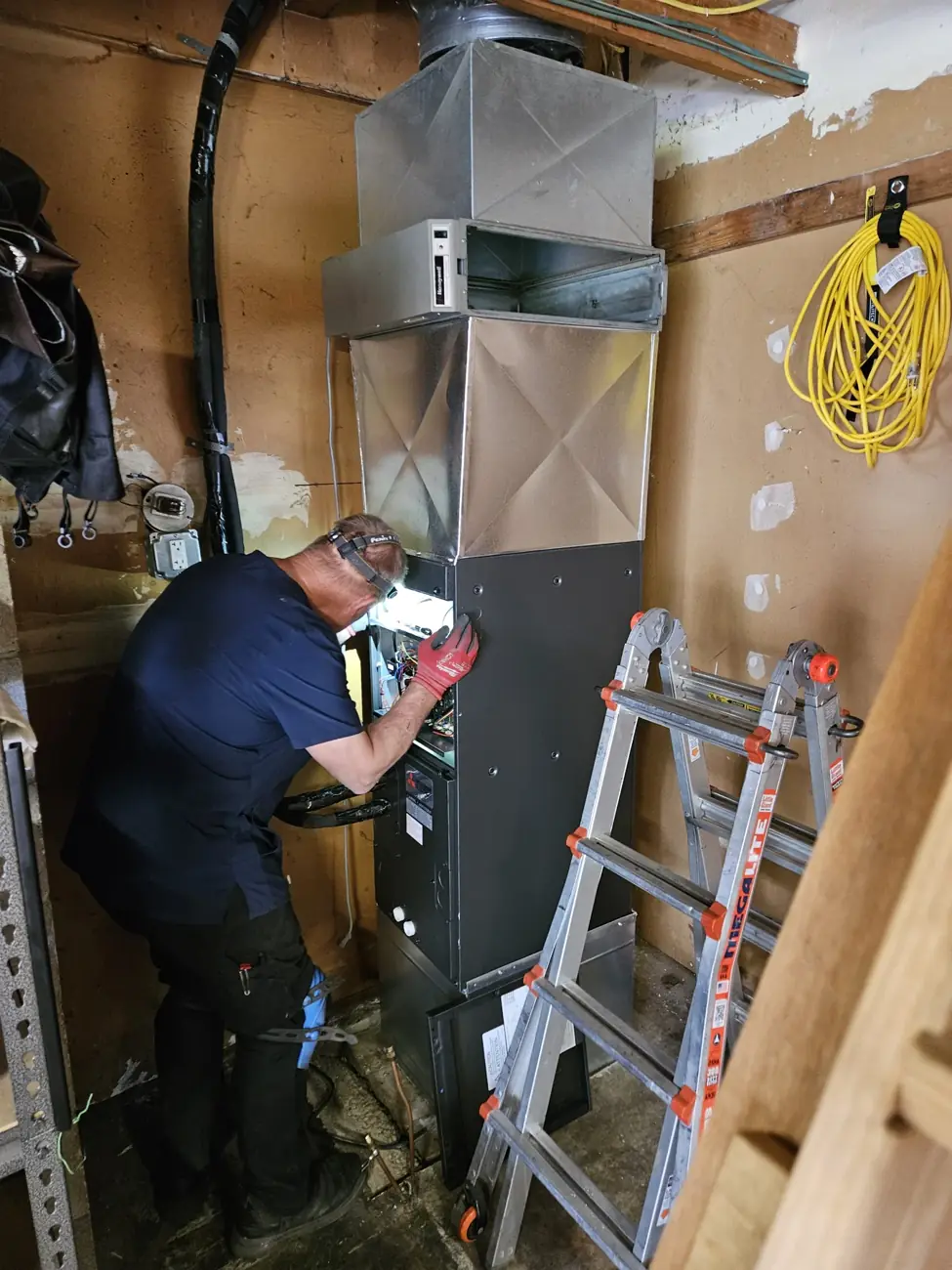
The exact scope depends on the equipment and what the assessment reveals. A typical review may include thermostat settings and the starting, operating, and shutoff cycle. The technician may inspect accessible electrical connections, controls, moving parts, and airflow-related components. For a system with a condensate drain, the drain may be checked for blockage when relevant to the equipment’s operation.
For a furnace, a professional may examine gas or oil connections, pressure, burner operation, and the heat exchanger as applicable. These are not do-it-yourself checks: combustion and electrical components require appropriate training and safe procedures. A concern should be documented and explained in plain language, with repair or replacement discussed only if the condition and home assessment support it.
For a heat pump, the review may include the indoor and outdoor units, airflow, controls, operating modes, and visible condition of coils or connections. The outdoor unit needs reasonable clearance from leaves and other debris, but homeowners should avoid bending coil fins, spraying components aggressively, or working inside the cabinet. If performance is poor, a qualified professional may need to investigate several possible causes rather than assuming the refrigerant, filter, or thermostat is at fault.
At-home care versus professional review
| You can usually do | Leave to a qualified professional |
|---|---|
| Check the filter and clean or replace it as the equipment or filter indicates. | Combustion, heat-exchanger, refrigerant, electrical, and sealed-system evaluation. |
| Keep the outdoor heat-pump area reasonably clear of loose debris. | Testing controls, connections, safe operation, and equipment-specific components. |
| Note noises, odors, uneven airflow, and thermostat changes. | Diagnosis, adjustment, repair, or a replacement recommendation after assessment. |
ENERGY STAR advises inspecting, cleaning, or changing filters monthly for central air conditioners, furnaces, and heat pumps, while the actual filter and equipment instructions still matter. A dirty filter can restrict airflow and contribute to equipment strain. If you are unsure which filter is correct or how it fits, ask a professional to show you rather than forcing a filter into place.
A maintenance visit should answer useful questions
For a heat pump, you can also ask how the system is intended to operate across heating and cooling seasons and whether the controls match that setup. For a furnace, ask what the technician can confirm about safe operation and airflow. If replacement enters the conversation, sizing and the home’s ductwork or electrical context should be assessed rather than inferred from a label alone. ENERGY STAR notes that properly sizing a heat pump is essential to performance and comfort.
Maintenance notes should distinguish observation from recommendation. “Filter is loaded” is different from “system needs replacement, ” and a visible issue may require additional testing before its cause is known. Ask which finding affects safe operation, which affects comfort or airflow, and which can be monitored. If repair or replacement is discussed, ask what was evaluated about the component, sizing, ducts, controls, electrical capacity, and your home’s comfort goals.
Frequently asked questions
How often should heating equipment be maintained?
A common planning rhythm is a professional heating checkup before the main heating season, with filter attention more often as needed. Your equipment instructions, household conditions, and service history may change that rhythm.
Is changing the filter the same as maintenance?
No. Filter care is an important homeowner task, but a professional review can examine operation, controls, airflow, combustion-related components, electrical connections, and other equipment-specific conditions when applicable.
Does a heat pump need different maintenance from a furnace?
Yes. Both need appropriate airflow and controls, but a heat pump has indoor and outdoor components and changes operating modes. A furnace has combustion-related components. The equipment type should shape the assessment.
What should I do if the system is making a new noise?
Note when it occurs, whether airflow or temperature changed, and whether the sound is getting worse. If you notice a safety concern, unusual odor, or equipment behavior that seems unsafe, stop using the system when appropriate and contact a qualified professional for guidance.
Next step
Ready to plan seasonal care? Share what you know about your furnace or heat pump, its age, and any comfort or operation changes through Breeze’s contact page. A home-specific conversation can clarify what should be reviewed and what information to have ready.