
SPAN Authorized Installer
Considering a SPAN smart panel? Breeze reviews your electrical setup and explains whether SPAN fits your project. Conventional panel and EV charger options remain part of the conversation.

Residential service
Electrical help for the home you use every day.
Breeze’s residential electrical services cover diagnosis, safety inspections and a range of repairs and installations. Start with the issue or project, then review a clear scope.
Diagnosis and safety inspections
Investigate electrical concerns, review the findings and discuss recommended work.
Panels, breakers and surge protection
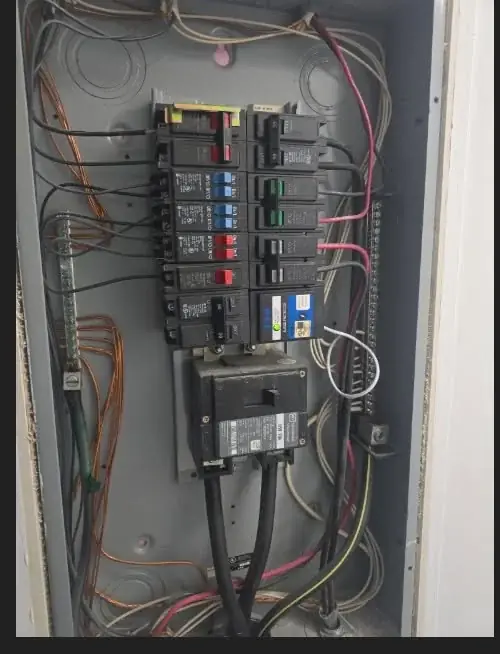
Diagnosis, repair and installation for electrical panels, circuit breakers and whole-home surge protection. Ask about SPAN Smart Panel options where they fit the project.
Lighting, outlets and ceiling fans
Diagnosis, repair and installation for lighting and standard or GFCI outlets, plus ceiling-fan installation.
Our licensed electricians inspect the concern, perform appropriate testing, and explain the findings. We review recommended work and upfront pricing before repairs begin. If you approve the repair, we complete the work, test operation, and explain what was done. Breeze was founded on putting customers’ interests ahead of unnecessary upgrades and treating their homes with care. Electrical contractor license: BREEZHA754UG.
Electrical planning for the way your home is changing
An electric vehicle, a heat pump, an induction range, or another major appliance can change the conversation. The useful first question is not “Do I need an upgrade?” It is “What do I want my home to do, and what does the electrical system support?”
Start with your priorities, current equipment, and the locations where you may want power. That creates a better basis for planning a project now, staging it over time, or confirming that the equipment in place is a good fit.
Start with the home you have
A main breaker rating and open breaker spaces are useful clues, but neither tells the entire story. Capacity planning considers existing loads, proposed equipment, circuit space, the wiring route, and equipment specifications.
This is useful in established homes that were not planned around an EV or a shift to electric comfort systems. An older-looking panel does not automatically need replacement, and a newer-looking one does not answer every capacity question.
Panel capacity and circuit planning without the guesswork
An electrical panel distributes power to your home’s circuits. For new equipment, the question is whether the existing service and panel can accommodate it, or whether another approach should be considered.
Breeze can help begin the planning conversation about panel capacity, circuit space, and a proposed project’s electrical needs. For a focused look, visit our Electrical Panels page.
A thoughtful plan may account for:
- the electric equipment already connected to the home;
- the load and manufacturer requirements of proposed equipment;
- whether a dedicated circuit is needed;
- the practical path for wiring between the panel and the equipment location; and
- whether it makes sense to coordinate electrical work with a larger comfort or remodeling project.
The answer is not always a panel upgrade. A dedicated circuit or available breaker space may be the relevant next step; a larger change may be worth considering as part of a long-range plan. It depends on the home and project.
EV charging at home: plan for the car and the property
The right setup depends on the vehicle, driving habits, parking arrangement, and electrical system. Level 1 charging uses 120-volt power; Level 2 uses 240-volt power and typically needs a dedicated circuit and equipment designed for the installation.
Consider where the vehicle parks, whether the charger will be indoors or outdoors, how the cable can be routed, and manufacturer requirements. The home’s electrical capacity belongs in the same conversation; an installation should not rely on an extension cord or improvised outlet arrangement.
Explore home charging on our EV Chargers page. If an EV is part of a broader change in home energy use, connect that decision with a Heat Pumps & Electrification plan.
Electrical readiness for heat pumps and electrification
A heat-pump project starts with comfort: how your home is heated and cooled and what equipment suits the space. Electrical readiness is an important part of the plan, not a foregone conclusion about replacing a panel.
A home with central air conditioning may already have electrical infrastructure relevant to a heat-pump replacement. The selected equipment still needs review alongside the home’s other electrical loads. Consider comfort and electrical needs together early.
If you are comparing projects or their timing, current programs and eligibility can change. Our Rebates & Incentives page is the place to review the latest approved information; incentives should never be treated as guaranteed.
Permits and inspections: know what to ask
In Washington, most electrical work requires a permit and inspection, with limited exceptions. The correct authority depends on the location: some cities manage their own electrical permits and inspections, while many other locations fall under Washington State Department of Labor & Industries jurisdiction.
Ask which jurisdiction applies, whether the defined scope needs a permit, who will obtain it, and when inspection needs to occur. Washington L&I says the contractor performing electrical work is responsible for obtaining the permit. Requirements vary by location and project.
When an electrical planning conversation may help
Consider starting the conversation if you are:
- adding an EV charger or preparing for one later;
- evaluating a heat pump, ductless system, or other electric comfort equipment;
- wondering whether your panel has space for a new circuit;
- planning several electrical appliances or upgrades over the next few years; or
- unsure how a proposed project fits with your current electrical service.
Frequently asked questions
Does every EV charger or heat-pump project require a panel upgrade?
No. A project may need a dedicated circuit, available breaker space, or a broader capacity evaluation, but the home and the proposed equipment determine the answer. Planning is the way to find out instead of assuming an upgrade is required.
Can I use my existing electrical setup for a heat pump?
Possibly. Existing central air conditioning can be a useful indicator that the home has relevant electrical infrastructure, but it is not a substitute for reviewing the selected equipment and the home’s other electrical loads.
What should I decide before planning EV charging?
Start with where you park, the vehicle’s charging needs, the type of charging you want, and whether the charger will be inside or outside. Those choices help define the electrical work and capacity questions to review.
Do electrical projects need permits and inspections?
Most electrical work in Washington requires a permit and inspection, though exceptions exist. The authority and exact requirements depend on the project location and scope, so confirm them before work begins.
Talk through your electrical project
Tell Breeze what you want to improve, home charging, panel planning, heat-pump readiness, or a coordinated electrical project, and contact us to start with the next practical step.