
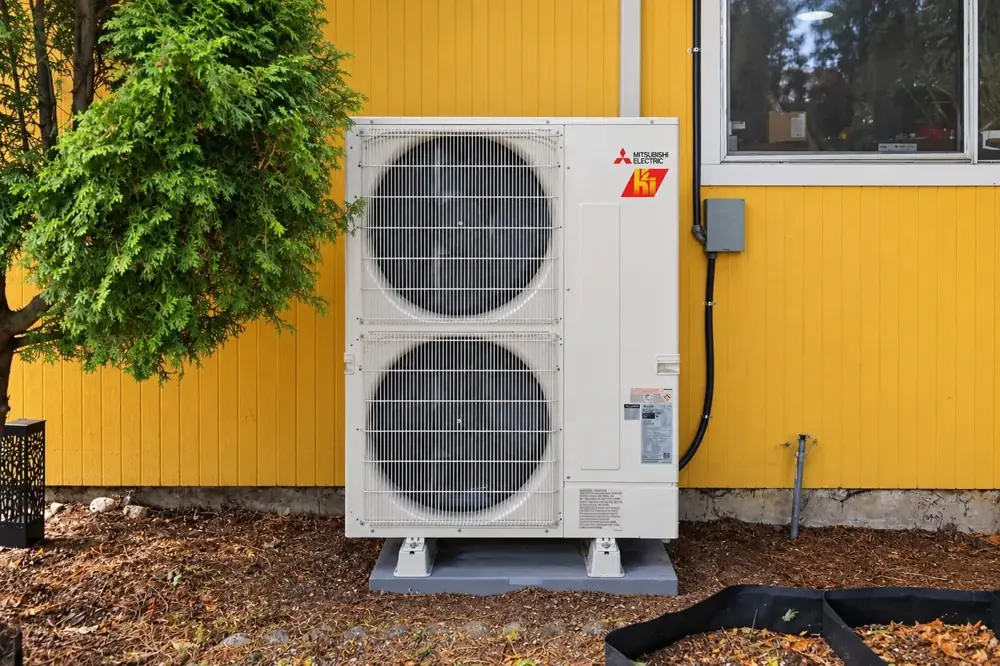
Find the right heat-pump starting point
A heat pump moves heat to warm a home and reverses the process for cooling. That makes it an option to discuss when an older system is due for replacement, when a home needs cooling, or when one room is difficult to keep comfortable. The best approach depends on the rooms, existing equipment, ducts, electrical system and how the home is used, not on one product name.
If you already have ducts, begin with heat-pump installation planning: equipment selection, home-specific sizing, duct condition and distribution. If a bonus room or addition needs its own solution, explore ductless mini-splits. For colder-weather equipment questions, read the Mitsubishi Hyper-Heat guide and ask for model-specific performance details rather than assuming every system performs alike.
Plan the equipment and the house together
A useful estimate should explain the problem being addressed and why the proposed design fits this particular home. Bring your comfort observations, system age if known, any trouble spots and future plans to the conversation. Those details help frame the questions worth checking:
- Sizing and layout. Which rooms need heating or cooling, and how will the design account for insulation, windows, sun exposure and actual use? Square footage alone is not a complete sizing method.
- Ducts or zones. Can the current ductwork support the intended airflow? If not, should the plan include duct repairs, a different distribution approach, or a targeted ductless zone?
- Electrical readiness. What does the proposed equipment require, and what can the home’s existing circuits and service support? A panel assessment helps answer that question; a panel replacement is not automatically necessary.
- Cold weather and ownership. Ask how the selected model is expected to operate under local design conditions, whether an existing or supplemental heat source is appropriate, and what maintenance and service the system will need.
For a broader sequence of home projects, see home electrification. If an EV charger may follow, raising that goal early can make electrical planning more useful. Review rebates and incentives directly with the relevant program before including any possible incentive in a budget; eligibility and rules can change.
Common homeowner questions
Can a heat pump provide both heating and cooling?
Yes. Heat pumps can serve both needs, but equipment selection and distribution should be designed for the home. Ask how the proposed system will serve your actual rooms in winter and summer.
Will a ductless unit serve an entire home?
Sometimes a ductless design can serve a large portion of a home; a single indoor unit is not an automatic solution for separated rooms. Layout, loads, unit placement and any retained heat source matter.
Does a heat pump require a new electrical panel?
Not necessarily. Equipment needs and the home’s existing electrical loads should be reviewed before deciding whether a new circuit, load-management approach or panel work is appropriate.
Can I count on a rebate when planning the project?
Do not assume an incentive is available or that the project qualifies. Check current program rules, equipment requirements, utility or address eligibility and any steps required before work begins.
Make the next step home-specific
You do not have to choose an exact system before you call. Tell Breeze which rooms feel uncomfortable, what equipment you have, and whether cooling, electrification or future charging is part of the plan. Start a conversation with Breeze and ask what should be assessed before an estimate is prepared.