Start with your home
A new furnace should fit the home, not just the space where the old unit sits. Breeze helps homeowners in Kent, King County and the Eastside think through the full installation: the home’s heat loss, equipment sizing, duct airflow, venting, electrical requirements and the practical differences between gas and electric heat. Our approach is friendly, careful and grounded in what an on-site evaluation can actually confirm.
Whether a furnace is nearing the end of its service life or a remodel has changed the home’s needs, the right replacement starts with information. We look at the existing system, listen to comfort concerns and explain the options without assuming that a larger unit or a like-for-like swap is automatically best. It is one more way Breeze is Innovating the Future of Home Comfort.
Start with the home, not a rule of thumb
What an evaluation should consider
A furnace’s capacity should be selected from the home’s characteristics, not simply its floor area or the rating of the old equipment. An evaluation may consider insulation, windows, ceiling height, air leakage, orientation, additions, room-by-room comfort and how the home is used. Those details help determine an appropriate heating capacity and whether the existing duct system can support it.
Oversized equipment can reach its set point quickly and cycle more often, which may affect comfort and equipment life. Undersized equipment may struggle during colder conditions. The actual recommendation depends on the home’s measured or documented conditions and the equipment selected.
Airflow is part of the installation
A furnace produces heat, but the duct system delivers comfort. Before replacement, the technician may inspect supply and return paths, filter location, registers, dampers, visible duct condition and static-pressure or airflow concerns. Leaky, restricted or poorly balanced ducts can reduce comfort and efficiency even when the furnace itself is new.
The evaluation can also identify practical changes: a filter cabinet that needs attention, a return that is too limited, a damaged connection or a room that needs better distribution. Any duct repair or modification should be confirmed after the system and home’s conditions are reviewed; not every installation requires the same work.
Venting, combustion and electrical details
If the home uses gas
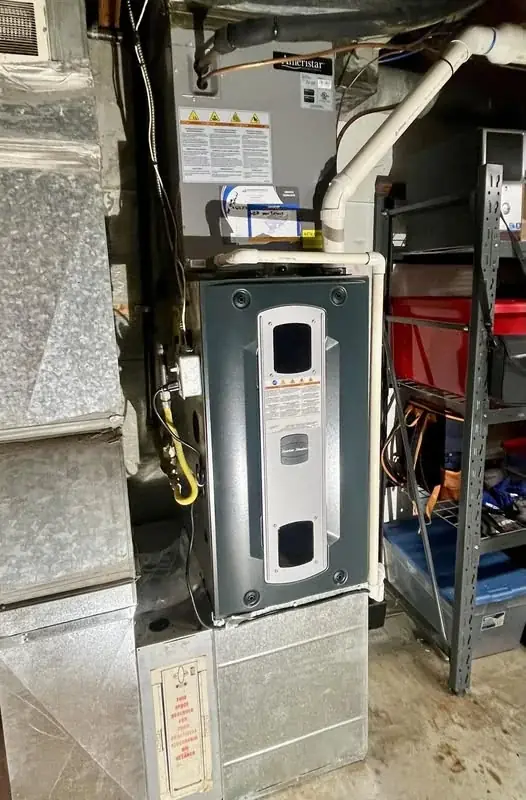
A gas furnace needs an appropriate fuel connection, combustion air and a venting arrangement that matches the equipment and local requirements. A replacement can change vent materials, routing, clearances or termination details, particularly when the new furnace operates differently from the old one. These details should follow the selected equipment’s installation instructions and applicable code, not a generic template.
Because fuel-burning equipment can be a potential source of carbon monoxide when combustion is incomplete, safe installation includes careful attention to combustion and exhaust. Homeowners should follow the manufacturer’s guidance for carbon-monoxide alarms and respond promptly to any alarm or unusual symptoms by leaving the area and contacting the appropriate emergency resources. Breeze does not diagnose a carbon-monoxide event through a web page.
If the home uses electric heat
An electric furnace or air-handler may have different electrical load, breaker, disconnect, wiring and service-clearance requirements than the existing equipment. The evaluation should confirm whether the home’s panel and circuit arrangement are suitable for the proposed equipment. If broader electrical work is needed, that scope should be identified separately rather than assumed to be part of every furnace replacement.
Gas and electric choices can also connect to a home’s longer-term plans. A homeowner considering a heat pump, panel work or future electrification may want those possibilities discussed before committing to a replacement. The best path depends on the home’s envelope, ductwork, available capacity, comfort goals and local requirements.
A practical replacement checklist
Use this short list when comparing options with an installer:
- Sizing: Is the recommendation based on the home’s characteristics rather than only the old furnace or square footage?
- Airflow: How will supply, return, filtration and duct condition be evaluated?
- Venting or electrical: What will be checked or changed for the selected gas or electric equipment?
- Fit: Will the equipment, access, clearances, controls and condensate needs work in the existing space?
- Verification: What startup checks will confirm operation, airflow and safe performance after installation?
- Future plans: Would a heat pump, panel project or other comfort change affect today’s decision?
This is a conversation guide, not a remote diagnosis. The final scope should follow an in-home assessment and the requirements of the selected system.
Frequently asked questions
Should I replace my furnace with the same size?
Not necessarily. The old furnace’s size may reflect an earlier calculation, a previous remodel or an oversized selection. A new recommendation should account for the current home, duct capacity and equipment requirements. Breeze can explain what the evaluation supports before a decision is made.
Can existing ductwork be reused?
Sometimes. Reuse depends on condition, layout, leakage, return-air capacity, airflow needs and the compatibility of the proposed equipment. A visual inspection may indicate where further testing or a modification is appropriate; a replacement should not assume that every duct is ready to reuse.
Is gas or electric heat better for my home?
There is no universal answer. Gas may involve combustion-air and venting considerations, while electric equipment may involve circuit and panel capacity. A heat pump may also be worth discussing when heating and cooling, ductwork and electrification plans overlap. The home’s assessment and your priorities should shape the comparison.
What should I prepare for an installation conversation?
Bring recent utility or equipment information if available, the approximate age and model of the current furnace, rooms that feel too hot or cold, filter sizes, past repair concerns and any planned remodeling. Photos of the equipment area can help start the conversation, but they do not replace an on-site evaluation.
Next step
If you are considering furnace installation or replacement, contact Breeze to start a conversation about your home, comfort concerns and the evaluation needed to define the work. We will keep the recommendation tied to what the home and selected equipment can support.