Residential service
Service pricing to help you plan.
- Air-conditioning or heat-pump tune-up
- $179
- Mitsubishi tune-up
- Starting at $224
Ask what your visit includes and confirm the total, including any applicable charges, before scheduling. Repair work and installation are quoted separately.
Start with your home
A little planned care before the cooling season can make an air-conditioning system easier to understand and easier to live with. Breeze helps homeowners in Kent, King County and the Eastside think through the basics: filters, coils, airflow, controls and the signs that a system needs a closer look.
Maintenance is not a remote diagnosis or a promise that every system will perform the same way. Equipment age, installation, ductwork, weather and past repairs all matter. The right scope starts with an assessment of the home and system in front of us, then separates simple upkeep from work that belongs with a qualified technician.
Why seasonal maintenance matters
Start before heavy cooling
A spring check is a practical time to test cooling equipment before it is carrying the season’s workload. ENERGY STAR recommends annual pre-season check-ups, with cooling equipment checked in spring. A planned visit can identify an airflow restriction, drainage concern, loose connection or control issue before it becomes a larger comfort problem, but the outcome depends on what the inspection finds.
Filters and coils affect airflow
A filter that is loaded with dust can restrict airflow and make equipment work harder. Dirty indoor or outdoor coils can also reduce the system’s ability to transfer heat, potentially lengthening run time. These are reasons to keep filters accessible and to have coil condition considered as part of maintenance, not reasons to install a more restrictive filter or clean a component without checking the equipment’s requirements.
What homeowners can do
A short, repeatable routine
- Check the filter about once a month while the system is in regular use. Clean or replace it when it is dirty, using the size and type specified for the equipment.
- Keep supply and return grilles open and clear of furniture, rugs and stored items.
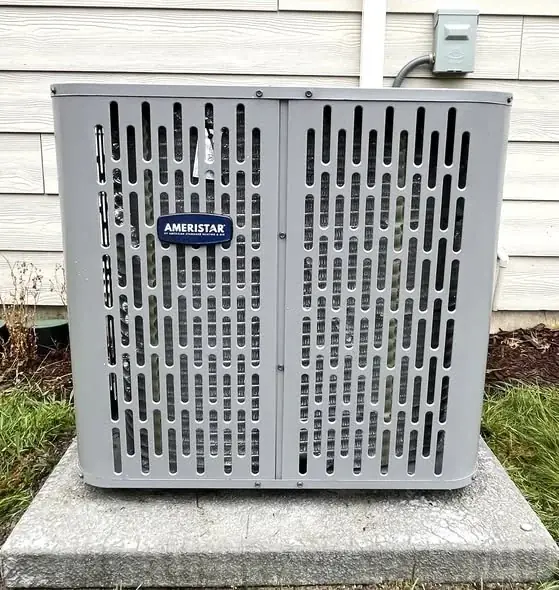
- Look at the outdoor unit from a safe distance. Keep leaves, grass and other obstructions from crowding it, without bending fins or taking panels off.
- Notice changes: rooms that no longer cool evenly, weak airflow, unusual sounds, water near the indoor unit, or a system that starts and stops unusually often.
- Keep the thermostat and equipment manuals available. Note the filter size, recent service history and what you observed before requesting an assessment.
Do not remove access panels, handle refrigerant, bypass a control or work around electrical connections as a homeowner maintenance step. Turn the system off and request professional guidance if you see water damage, burning smells, exposed wiring or other unsafe conditions.
What a technician may assess
Assessment before action
Depending on the equipment and the requested scope, a technician may inspect or test thermostat operation, start-up and shut-down controls, electrical connections, condensate drainage, blower components, indoor and outdoor coils, and system airflow. ENERGY STAR also identifies refrigerant level as a cooling-system check. Refrigerant is not a homeowner refill task: any adjustment, leak investigation or repair should be based on the equipment and an actual assessment.
Maintenance should not be treated as a standard bundle that fits every home. A ducted central system, a heat pump in cooling mode and a ductless system have different access points and maintenance needs. A technician can explain what was observed, what is recommended now, and what can wait, without assuming that cleaning, adjustment or replacement is needed before the evidence is clear.
Homeowner basics vs. technician work
| Homeowner basics | Technician-only or assessment-led work |
|---|---|
| Check and replace a dirty filter; keep grilles clear | Test electrical connections, motors and controls |
| Keep the outdoor area clear without opening panels | Inspect coils, blower condition and measured airflow |
| Record symptoms, sounds and water concerns | Evaluate drainage, refrigerant condition and safe operation |
A practical maintenance decision checklist
- System cooling normally, filter visibly dirty: replace or clean the filter as directed, then monitor airflow.
- Uneven cooling, weak airflow or longer run times: request an assessment; do not assume the filter is the only cause.
- Water near the indoor unit or repeated shut-offs: stop guessing and ask for professional guidance before continued operation causes damage.
- Cooling season approaching and history is unclear: gather the model information and service history, then ask what a seasonal check should include for this equipment.
- Considering a larger repair or replacement: first confirm whether the concern is airflow, controls, drainage, coil condition, refrigerant, ductwork or equipment age; the appropriate path depends on findings.
Frequently asked questions
How often should I change my AC filter?
Check it about monthly during regular use. Clean or replace it when dirty, following the equipment and filter instructions. Homes, pets, construction dust and filter type can change how quickly it loads; a fixed calendar is not a substitute for looking at the filter.
Can I clean my air-conditioning coils myself?
Visible debris around the outdoor unit can be cleared carefully from the surrounding area, but coil cleaning inside equipment, fin work and access-panel removal are better treated as technician tasks. The correct method depends on coil location, access and the condition found during assessment.
Does maintenance guarantee lower energy bills?
No. Clean filters, coils and suitable airflow support proper operation, but energy use also depends on weather, thermostat settings, ductwork, equipment condition and home design. A maintenance visit can identify conditions that deserve attention; it cannot guarantee a particular bill or outcome.
Is an air-conditioning check the same for a heat pump?
Not necessarily. A heat pump can cool and heat, and ducted and ductless configurations have different components and access. Ask for a system-specific scope, especially if the equipment operates in both modes.
Next step
Want to plan seasonal care or talk through a cooling concern? Contact Breeze with your equipment type, filter size if known, recent service history and the symptoms you have noticed. We’ll use that information to clarify the appropriate assessment for your home and explain the next step.