
Start with your home
One room is stuffy while another is chilly. The thermostat says the system is running, yet a bedroom, bonus room, or upstairs space never seems to catch up. Those patterns can be frustrating, and they do not automatically mean you need new heating or cooling equipment.
Air has to travel from the equipment, through ducts, into each room, and back again. A restriction, disconnected run, leak, undersized return path, blocked register, control setting, or change to the home can affect that trip. An assessment is a way to look for the cause before choosing a fix. It separates a comfort complaint from assumptions about what is behind it.
Start with the room pattern, not a guess
Uneven comfort is useful information. Notice which room feels different, when the problem happens, whether doors are open or closed, and whether the concern appears in heating, cooling, or both. A room above a garage, a recently finished space, a sun-facing room, or a room far from the air handler can have a different load than the rest of the home. The duct path may be only one part of the picture.
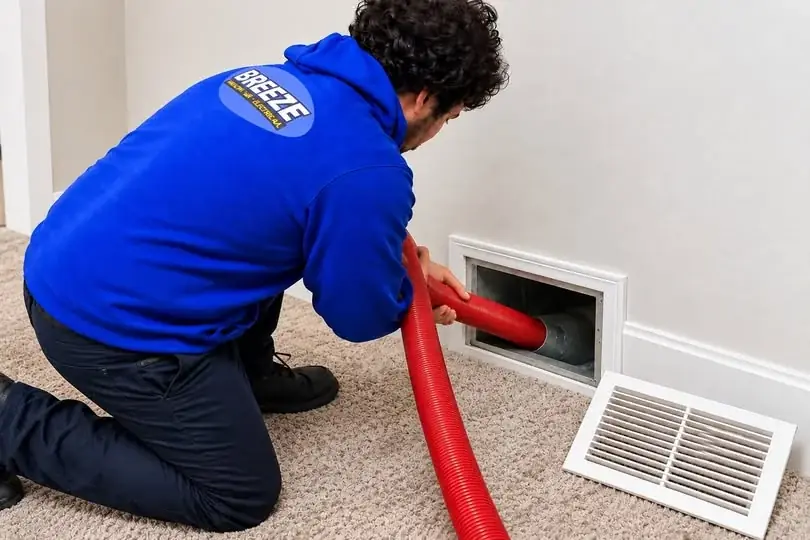
A good evaluation also considers the home’s basics: thermostat settings, filter condition, visible supply registers and return grilles, and whether furniture, rugs, or closed doors interfere with air movement. A qualified professional may then consider accessible duct connections, flex-duct bends or compression, return-air pathways, equipment operation, and how air is distributed room to room. What can be inspected depends on where the ducts and equipment are located and what can be safely accessed.
The point is not to declare a diagnosis from a single cold room. It is to identify a sensible next question: is air failing to reach the room, failing to return, escaping along the way, being delivered unevenly, or being asked to overcome a room-specific heat gain or loss?
What an airflow assessment can help sort out
| What you notice | Questions worth investigating | Possible direction after findings |
|---|---|---|
| One or two rooms lag behind | Are supply and return paths open and proportionate? Does the room have a different heating or cooling load? | Adjust expectations, improve air paths, or consider a targeted design solution. |
| Weak air at a register | Is the register blocked, the run restricted, or the connection compromised? | Correct an accessible restriction or evaluate the duct path further. |
| Comfort varies when doors close | Does the room have an adequate return-air path when isolated? | Explore return-air or transfer-path options appropriate to the home. |
| Higher bills plus hard-to-condition rooms | Are accessible ducts leaking, poorly connected, or routed through an unconditioned area? | Discuss repair, sealing, insulation, or broader performance priorities after evaluation. |
These are decision prompts, not remote diagnoses. Duct leakage can waste conditioned air before it reaches its destination, while a tight bend or crushed flexible section can limit the volume that gets through. On the return side, a high-resistance path can make it harder for the system to circulate air as intended. Airflow also affects how equipment performs, so a comfort concern deserves more than simply turning the thermostat lower or higher.
An airflow assessment is different from a duct-sealing treatment. It begins by determining whether leakage is actually contributing to the complaint, alongside restrictions, distribution, return air, and the room itself. If a leakage issue is identified, the next step should be chosen from the findings, not presumed at the start.
A practical three-step path
- Describe the comfort pattern. Share the rooms involved, seasons or times of day, recent remodels, changes in occupancy, and what you have already observed. Specific examples help focus the visit.
- Inspect and evaluate what is accessible. A qualified professional can review the system and available distribution paths, observe airflow-related conditions, and decide whether further measurements or testing would clarify the issue.
- Review choices in order. Discuss what appears most likely, what remains uncertain, and which next action is proportionate. The answer may be a simple correction, a targeted ductwork conversation, maintenance, a whole-home performance priority, or a recommendation to evaluate equipment design.
This sequence keeps the homeowner in the decision. It also avoids treating every uneven room as a reason for major replacement. ENERGY STAR notes that poor airflow can reduce comfort and efficiency; its guidance also recommends evaluating ducts and, when appropriate, leakage testing. The details matter because a home’s layout, loads, and existing equipment are not interchangeable.
Make everyday observations safely useful
Before a conversation, write down the affected rooms and whether the issue changes with outdoor temperature, sunshine, or closed interior doors. Check that visible registers and return grilles are not covered. If you normally replace your HVAC filter, use the correct size and follow the equipment instructions; a filter that is overdue or improperly fitted can be relevant to airflow.
Avoid reaching into ducts, removing equipment panels, altering wiring or fuel connections, or taping over grilles to force air elsewhere. Closing multiple supply vents can increase resistance in a system and may shift the problem rather than solve it. If you notice burning odors, damaged wiring, water around equipment, or another immediate safety concern, stop using the affected equipment when safe to do so and seek appropriate qualified assistance.
Frequently asked questions
Why is one bedroom hotter or colder than the rest of the house?
The room may have a different solar exposure, insulation level, location, or supply-and-return path. A closed door, blocked grille, duct restriction, leakage, or equipment airflow issue can also contribute. An assessment helps distinguish among those possibilities rather than blaming the thermostat alone.
Can I fix uneven airflow by closing vents in rooms that feel comfortable?
Usually, that is not a dependable first fix. Closing several vents can increase resistance and change airflow elsewhere. Start with unobstructed registers and a clear description of the pattern, then have the distribution and return paths considered before making broad adjustments.
Does weak airflow always mean the ducts are leaking?
No. Leakage is one possibility, but weak delivery can also relate to a restricted or disconnected run, a return-air limitation, a register issue, system settings, filter-related resistance, or a design mismatch. Findings should guide the next step.
Does a comfort problem mean I need to replace my HVAC system?
Not necessarily. Some concerns can be related to accessible distribution details or room-specific conditions; others may warrant a larger system-design conversation. An evaluation should clarify the evidence and options before a replacement decision is made.
Talk through the next sensible step
A comfort concern is easier to solve when the conversation begins with how your home actually behaves. Bring your observations, ask what can be evaluated, and request a clear explanation of the options and trade-offs.