Residential service
Service pricing to help you plan.
- Furnace diagnostic
- $148
Ask what your visit includes and confirm the total, including any applicable charges, before scheduling. Repair work and installation are quoted separately.
Start with your home
A furnace can keep running while comfort quietly changes. One room may stay cold, the system may start and stop more often, or airflow may feel weaker than it did last winter. Those changes are useful signals, not a remote diagnosis. Breeze helps homeowners in Kent, King County, and the Eastside understand what may be affecting furnace performance and what a practical next step could be.
Our approach is friendly, careful, and grounded in the home in front of us. A professional assessment can help separate a repairable equipment issue from an airflow, duct, thermostat, or home-envelope concern. That is part of Innovating the Future of Home Comfort: making the decision clearer before recommending a path.
Details that help narrow the possibilities
Write down when the change began and whether it follows a weather change, remodeling, filter change, or thermostat update. Notice whether the furnace reaches the set temperature, whether some registers have little air, and whether the blower continues after the burners stop. These observations help a technician choose sensible tests; they do not replace an inspection.
Signs your furnace may need attention
Uneven heat and weak airflow
Cold bedrooms, a warm living room, or registers that feel noticeably different can have several possible causes. A restricted filter, blocked return, blower concern, duct leakage, control problem, insulation limitation, or equipment sizing issue may all affect how heat moves. Opening every register or turning up the thermostat may not address the underlying cause.
Before requesting help, note which rooms are affected, whether the issue happens on every heating cycle, and when the filter was last inspected or changed. Keep vents and returns clear, but avoid taking apart equipment or adjusting gas components yourself.
Short cycling or changing operation
A furnace that starts and stops repeatedly, struggles to stay on, makes a new sound, or takes longer to warm the home deserves attention. The cause could involve airflow, controls, ignition, sensors, combustion, or another component. A professional can observe the start-up and shutdown sequence and determine which checks are appropriate rather than guessing from a symptom alone.
If you smell gas, see smoke, or suspect a carbon-monoxide problem, leave the area and contact the appropriate utility or emergency authority. Do not attempt a furnace repair in an unsafe situation.
What a careful repair assessment may cover
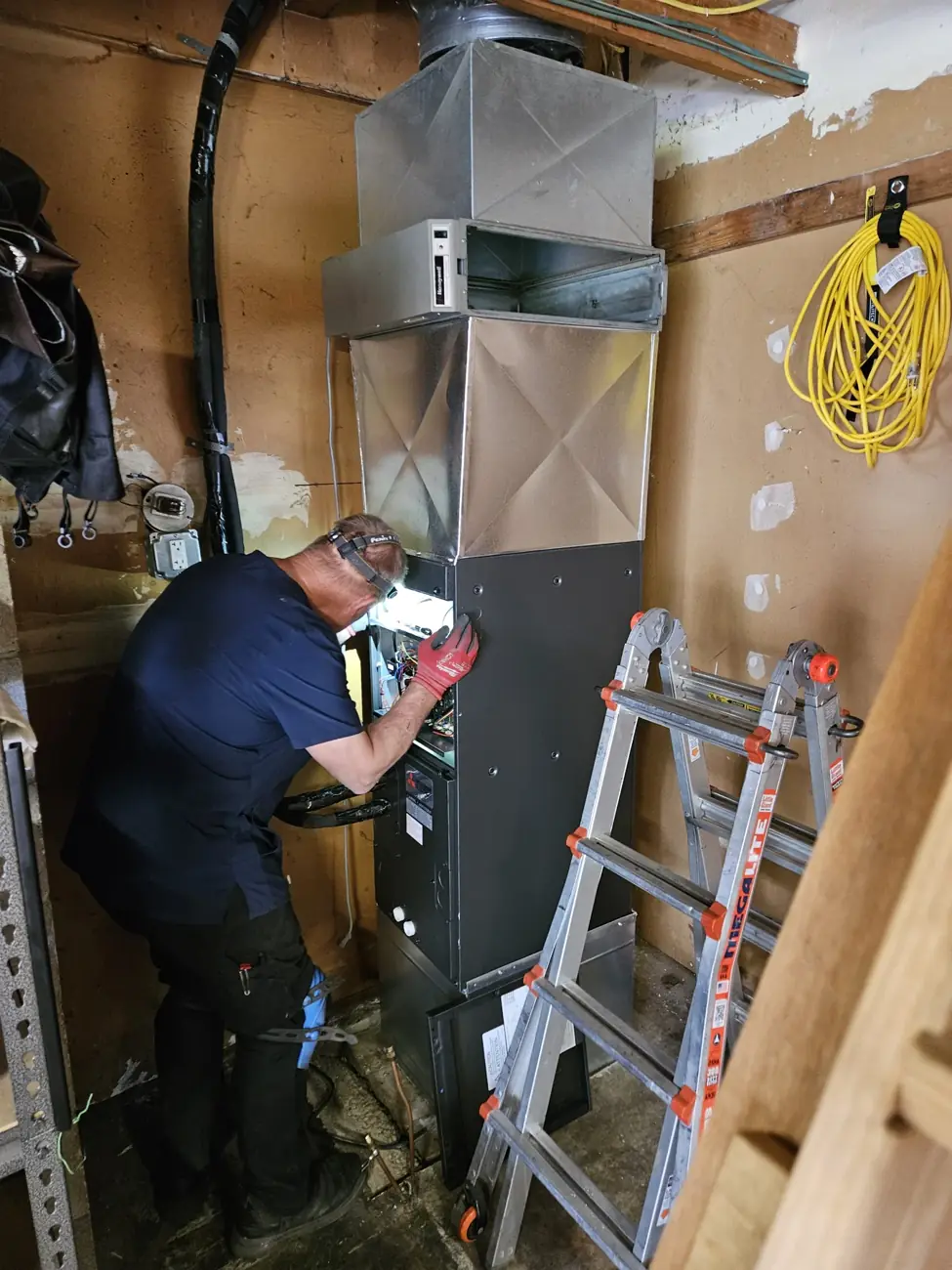
The exact scope depends on the furnace, fuel, installation, symptoms, and what an on-site inspection finds. When relevant, a qualified technician may review the thermostat call, filter and airflow conditions, electrical connections, controls, burner operation, fuel connections when applicable, and heat-exchanger condition. These checks matter because faulty connections or combustion problems can affect safe operation, not simply comfort.
The assessment may also look beyond the cabinet. Duct restrictions, disconnected or leaky ducts, return-air limitations, blocked registers, or room-by-room differences can change the result of an otherwise functional furnace. If the concern points to a related heating, duct, electrical, or insulation question, the recommendation should explain that connection and what would need to be confirmed.
The condition of the surrounding installation matters, too. Clearances, access, venting, drainage, thermostat placement, and the relationship between supply and return air can affect what is safe and appropriate. Not every item applies to every furnace, and a technician should explain which observations are relevant to yours. If a component needs replacement, ask what the part does, what the repair addresses, and what symptoms would indicate that further evaluation is needed.
ENERGY STAR advises seasonal professional check-ups and notes that heating-specific maintenance can include reviewing fuel connections, burner combustion, and the heat exchanger. Homeowners can usually inspect, clean, or change filters as directed for their system; the right interval varies with equipment and household conditions.
Repair or replacement: a clearer conversation
Repair is often worth considering when the issue is identifiable, the equipment remains suitable for the home, and the repair’s expected value makes sense in context. Replacement may deserve discussion when repairs are frequent, performance keeps declining, energy use is changing, comfort problems persist, or the furnace is older. Age alone should not make the decision; condition, safety, parts availability, operating pattern, and the home’s future heating plan all matter.
| If the assessment shows: | A reasonable next question is: |
|---|---|
| A specific, contained component or control issue | Can the repair restore safe, appropriate operation, and what else should be monitored? |
| A recurring fault, broader wear, or ongoing room-to-room imbalance | Would correcting airflow or another home-system issue change the repair decision? |
| Older equipment plus frequent repairs or persistent performance changes | What replacement options fit the home, ducts, electrical capacity, and comfort goals? |
A replacement conversation can include a properly sized furnace or a different heating approach, but equipment selection requires home-specific information. Breeze can explain the trade-offs that apply to the observed conditions rather than promise a universal outcome.
If replacement enters the conversation, useful questions include whether existing ducts can support the proposed equipment, whether electrical or fuel connections need review, how controls would work, and what changes the rooms may experience. A written scope should distinguish confirmed findings from assumptions. That keeps the decision focused on fit and safe operation.
Frequently asked questions
Is uneven heating always a furnace problem?
No. Uneven rooms can result from airflow restrictions, duct conditions, insulation, thermostat location, equipment operation, or a combination. An assessment should distinguish equipment symptoms from distribution or building-related causes.
What does short cycling mean?
It generally describes a furnace starting and stopping more often than expected instead of completing a normal heating cycle. The reason can vary, so record when it happens and what the home feels like; do not assume one failed part without testing.
Should I replace my furnace because it is old?
Not automatically. Age is one factor alongside repair history, operating condition, safety findings, comfort, available parts, and the suitability of the system for the home. ENERGY STAR lists furnaces over 15 years old as a point at which replacement may be worth considering, not an automatic prescription.
What should I have ready for a repair visit?
Share the rooms and symptoms, recent changes, thermostat behavior, unusual sounds or odors, filter history, and any prior service information. Do not remove panels or work on fuel, electrical, or combustion components to prepare.
Next step
If your furnace’s heat, timing, or performance has changed, contact Breeze to describe what you are noticing. The right recommendation starts with the equipment, the home, and the facts an assessment can confirm.