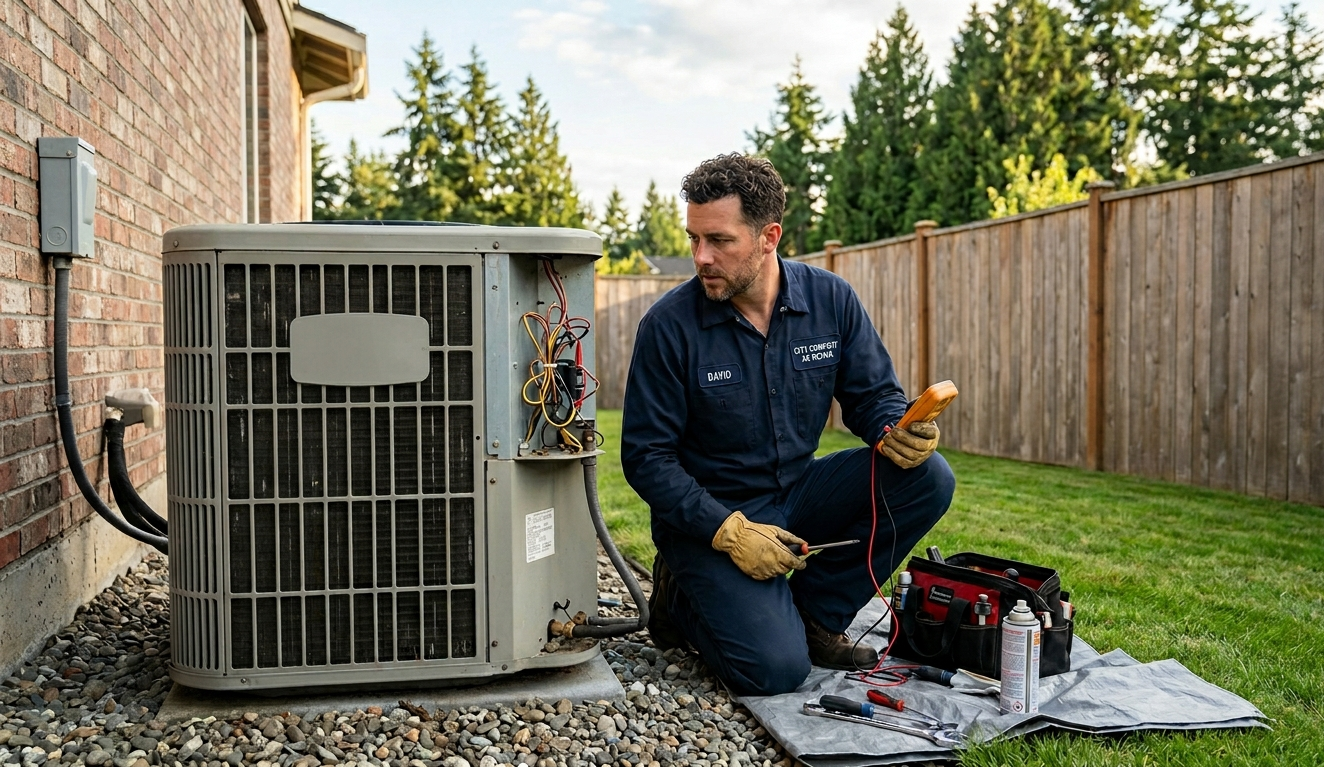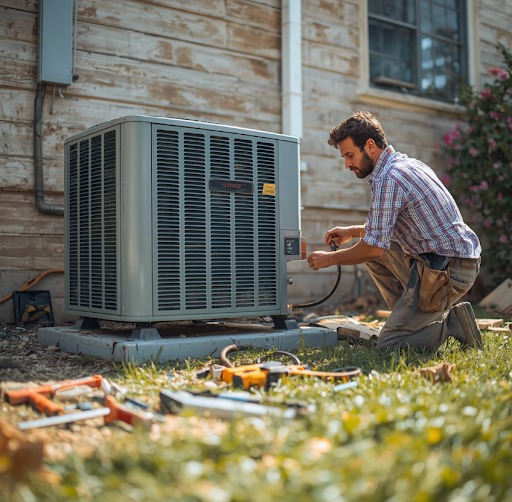
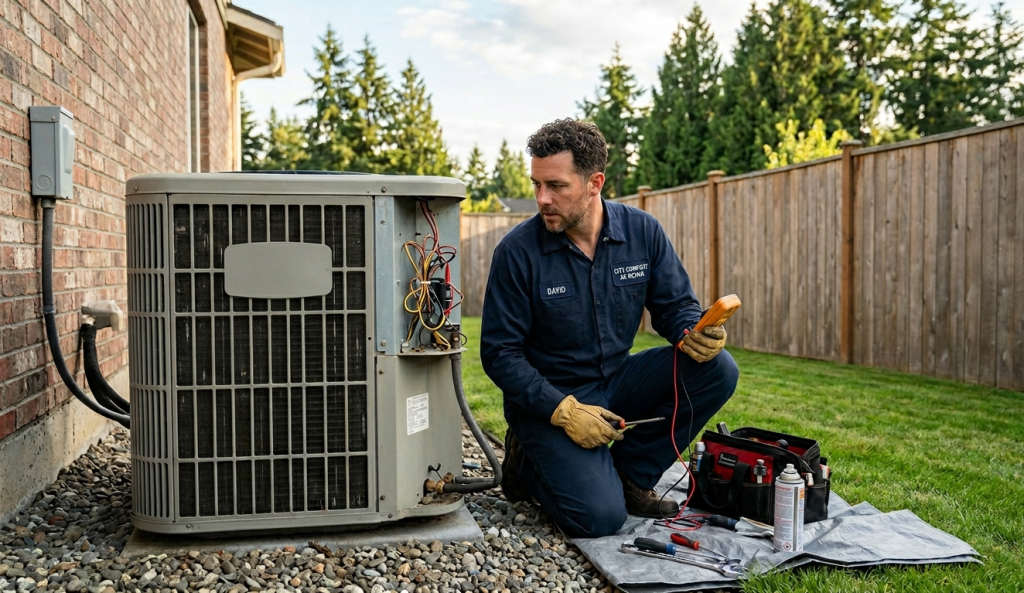
Every air conditioner has a breaking point. The tricky part is that most systems don’t quit all at once; they send signals for months before the final failure. The problem is that those signals are easy to miss or dismiss when the weather is still mild.
By the time Washington summer arrives and the temperature spikes, you find yourself with a non-functional AC, a week-long wait for service, and a repair bill that could have been avoided.
Here are five clear signs that your AC is telling you it won’t make it through another Washington summer and what to do about each one before you’re stuck in the heat.
Sign 1: It Takes Forever to Cool Your Home
If your AC used to bring the house down to a comfortable temperature in an hour but now takes three hours to do the same, or never quite gets there, that’s a serious red flag. Reduced cooling capacity is often caused by low refrigerant (which can indicate a leak), a failing compressor, or heavily fouled evaporator coils.
Refrigerant doesn’t simply run out; it leaks. That means adding refrigerant is a temporary fix at best unless the leak is also repaired. If your system is struggling to keep up on mild spring days, it definitely won’t hold its own on a 90-degree Washington afternoon in August.
Sign 2: Your Energy Bills Are Climbing — Without Explanation
A sudden spike in your electric bill during cooling season, without any change in your usage habits or local utility rates, almost always points to reduced system efficiency. As AC components age and wear, the system has to work harder and run longer to produce the same cooling output. That extra runtime shows up directly on your bill.
Compare your summer electric bills from the past three years. A steady upward trend, even with similar weather patterns, is a sign that your system is losing efficiency and may be nearing the end of its useful life. Systems older than 12–15 years are particularly prone to this decline.
Sign 3: Strange Noises During Operation
A properly functioning AC system should be relatively quiet; you should hear airflow and a gentle hum, nothing more. If you’re noticing grinding, squealing, banging, or rattling sounds, those are sounds of mechanical distress. Grinding typically points to failing motor bearings. Squealing can indicate a worn belt or bearing. Banging often means something is loose or broken inside the system.
None of these sounds fix themselves. In fact, continuing to run a system making these noises usually causes the damage to spread, what might have been a $200 bearing replacement can quickly become a $1,500 motor or compressor replacement. If you’re hearing anything unusual, turn the system off and call for service before further damage occurs.
Sign 4: Frequent Breakdowns and Repeat Repairs
One repair in the summer is inconvenient. Two repairs are a pattern. Three repairs are a sign that your system is in general decline. As AC systems age, components that have been under stress for years begin to fail in sequence. Fixing one problem often reveals another that had been masked by it.
A helpful rule of thumb used by HVAC professionals is the 5000 rule: multiply the age of your system (in years) by the estimated repair cost. If the result exceeds $5,000, AC replacement is almost always the better financial decision. For example, a 12-year-old system with a $500 repair costs 6,000 — a strong case for replacement over repair.
Sign 5: Your System Is More Than 12–15 Years Old
Even a well-maintained AC system has a finite lifespan. Most central air conditioning units last between 12 and 15 years with regular maintenance. Beyond that point, efficiency drops, repair frequency increases, and modern replacement systems are dramatically more efficient than what was available 15 years ago.
Modern AC systems are rated using SEER2 (Seasonal Energy Efficiency Ratio) standards. Replacing an old 10 SEER system with a current 18 SEER unit can reduce cooling energy costs by 30–40% annually. Over five to seven years, those savings often offset the cost of the new system entirely — while also giving you better comfort, quieter operation, and a system covered by a manufacturer’s warranty.
Don’t Wait Until Summer to Find Out, Call Breeze Heating Air & Electrical Now!
The worst time to discover your AC is failing is on the first genuinely hot day of the Washington summer — when every HVAC company in King County is fully booked and parts are on backorder. If you recognized one or more of these warning signs, the smartest move is to have your system evaluated now, while you still have time to make a thoughtful decision between repair and replacement.
At Breeze Heating Air & Electrical in Kent, WA, our team specializes in honest assessments and clear options, no pressure, no upselling. Whether your system needs a tune-up, a targeted repair, or a full replacement, we’ll tell you exactly what’s going on and help you choose the solution that makes sense for your home and your budget.
Serving Kent, Renton, Auburn, Federal Way, and all of King County, we are your local partner for keeping Washington homes cool all summer long. Schedule your inspection today at or give us a call — before the heat makes that call for you!